


Page 33 - Industrial Plant 2020
P. 33
Project Introduction

                                                     After the collapse of the bridge, Fagioli was called,
                                                     together with other expert operators for the removal of
                                                     Morandi bridge  sections. Main temporary joint ventures
                                                     companies for this project were: F.LLI OMINI S.p.A.,
                                                     which has been appointed as the Head of the group;
                                                     IPE progetti s.r.l., experts in structural and architectural
                                                     design ; IREOS s.p.A., specialized in environment
                                                     services and for over 15 years, in environment
                                                     reclamation. Fagioli with its high level of engineered
                                                     equipment was called to cooperate for the lowering
                                                     operations of the sections which did not breakdown
                                                     and represented a serious danger for the surroundings.
                                                     Fagioli put on the table its engineering capacity to
                                                     handle this huge concrete sections weighing, in some
                                                     cases, up to 916 ton. Fagioli used  tower lift and strand
                                                     jacking system ( with strand capacity up to 600 ton
                                                     each), SPMTs to mobilize the sections at ground level;
                                                     Crawler cranes used either for the lifting / lowering of
                                                     material and as a support for Fagioli equipment; gantry
                                                     lifting system and modular trailers.


                                                     First Operations, February 2019
                                                     On  the  9th  of  February 2019,    Fagioli    managed  to
                                                     execute the first step of the demolition operation of
                                                     Morandi Bridge in Genova. After the meeting with Italian
                                                     Prime Minister Conte and main National authorities,
                                                     held  during the morning of the 8th of February, Fagioli
                                                     started the  operation of lowering the first central bridge
                                                     section weighing about 916 ton, with a length of about
                                                     36 meter and 18 m wide and successfully completed
                                                     the operation. A delay in the operation was due to bad
                                                     weather condition, a strong wind which postponed the
                                                     lowering action.
                                                     Fagioli used No. 4 x 600 ton capacity strand jacks (No.
                                                     2 strand jacks on the Western side bridge pylon and
                              hen, on that doomed 14th   No. 2 on Eastern side bridge pylon ) to lower the central
                              of August 2018, a 210   bridge section (pictures 2-3).
                              meters  section  of  the   The jacks used for the lowering operation were
                              Morandi bridge collapsed,   positioned onto cantilever beams provided with
                              Genoa was put in knee by   additional No. 4 strand jacks (180 ton capacity each)   Picture 2
            W one of the saddest tragedy
            ever occurred to this ancient and glorious city. Since
            1963 the bridge was not only part of the modern
            landscape and architectural  representation of the
            city, but, due to its location, was one of the major
            links from Italy to France.
            After this tragic event, the city of Genoa supported
            by the Italian government decided to give a boost in
            accelerating the procedures of demolition of the
            bridge (including the environment reclamation of the
            affected area) and to find the most sustainable
            solution for the construction of a new bridge.
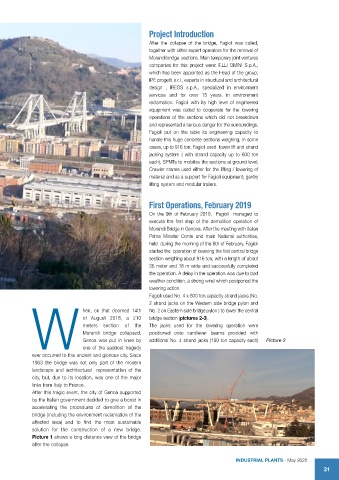
            Picture 1 shows a long-distance view of the bridge
            after the collapse.

                                                                                    IndustrIal Plants - May 2020
                                                                                                                   31

